
Three Porcelain Bodies, Three Ways to Fail
What to Specify Before You Order Custom Mugs
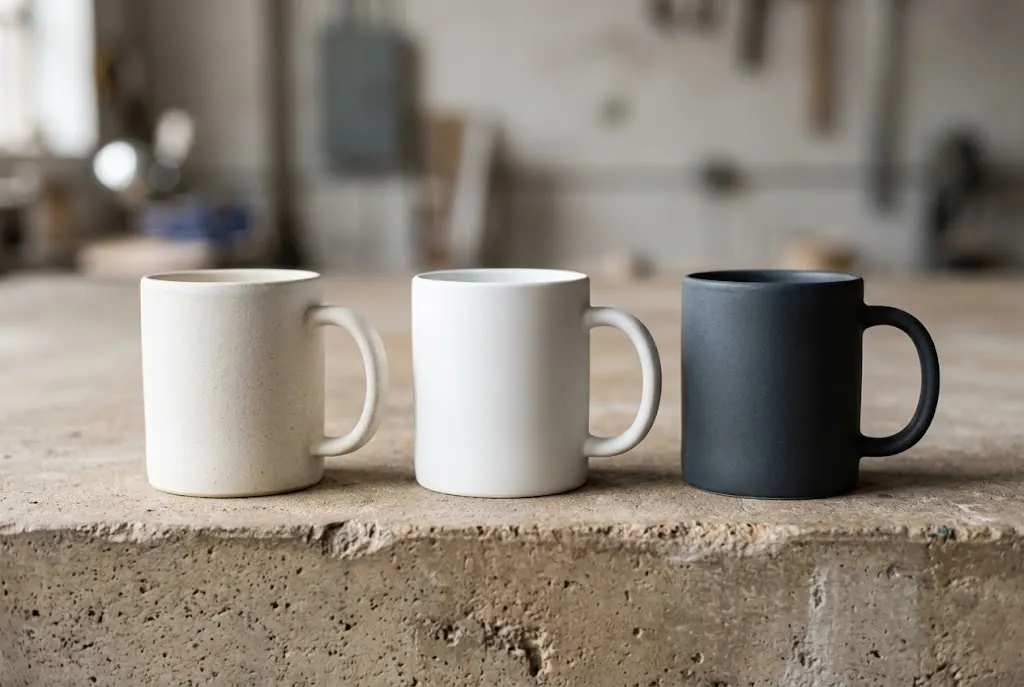
Table of Contents
- 1. Why the Body Is a Specification, Not a Finish
- 2. What Actually Differs at the Formulation Layer
- 3. Reinforced Porcelain: Built for Handling
- 4. Magnesium Porcelain: Whiteness and Its Price
- 5. Color Glazed Porcelain: The Highest-Variance Option
- 6. The Specifications to Write Into a Purchase Order
- 7. How Each Body Fails — and What That Costs You
- 8. Verification: What to Test and Against What
- 9. Matching Body to Scenario
- 10. FAQ
- 11. Partner With Mofecup on a Ceramic Mug Programme
1. Why the Body Is a Specification, Not a Finish
In custom ceramic mug projects, material choice gets treated as an appearance question: how white the mug looks, how smooth it feels, how well the artwork prints. Those things matter, but they are all symptoms. The decision underneath them is the ceramic body formulation — what the body is made from and how it is fired — and it determines durability, batch consistency, how the mug behaves after two years of daily use, and what you will be able to claim about it.
This is why two mugs that look identical in a sample photo can perform completely differently in service. It is also why “we’ll just use porcelain” is not a specification: porcelain is a category, and within it the three bodies used for custom drinkware trade strength, whiteness and visual flexibility against one another.
Rather than crown one body the winner, this article does the sourcing job: what distinguishes the three, what each one fails at, and what to write in a purchase order so the body you get is the body you specified.
Where this fits with our other guides
This article covers the ceramic body — the formulation layer. Adjacent decisions live elsewhere:
Which material family at all (steel vs glass vs ceramic) → choosing the right custom drinkware material
Surface finish and hand-feel (matte, frosted, glossy) → matte and frosted ceramics
What can migrate out of a glaze → heavy metal leaching in ceramic and glass drinkware
How the logo is applied → ceramic mug printing techniques compared
Which colours to use at all → why most brands get mug colours wrong
2. What Actually Differs at the Formulation Layer
All three are porcelain. What separates them is the composition of the body and the temperature at which it is fired — and those two variables are what set strength, whiteness and how repeatable the result is from one production run to the next.
| Body | What is added to the body | What that does | Where the trade-off lands |
|---|---|---|---|
| Reinforced porcelain | Raised alumina (aluminium oxide) content in the body | Denser fired structure, higher mechanical strength, better resistance to chipping and impact | Body reads slightly warmer and off-white rather than bright white |
| Magnesium porcelain | Magnesium-rich minerals, typically fired above 1280 °C | High surface whiteness, fine grain, smooth hand-feel, balanced weight | Generally less impact-tolerant than reinforced porcelain |
| Color glazed porcelain | Pigmented glaze layers applied over a base body | Strong visual differentiation; a brand can own a colour | Surface durability now depends on glaze formulation and thickness; firing control becomes critical |
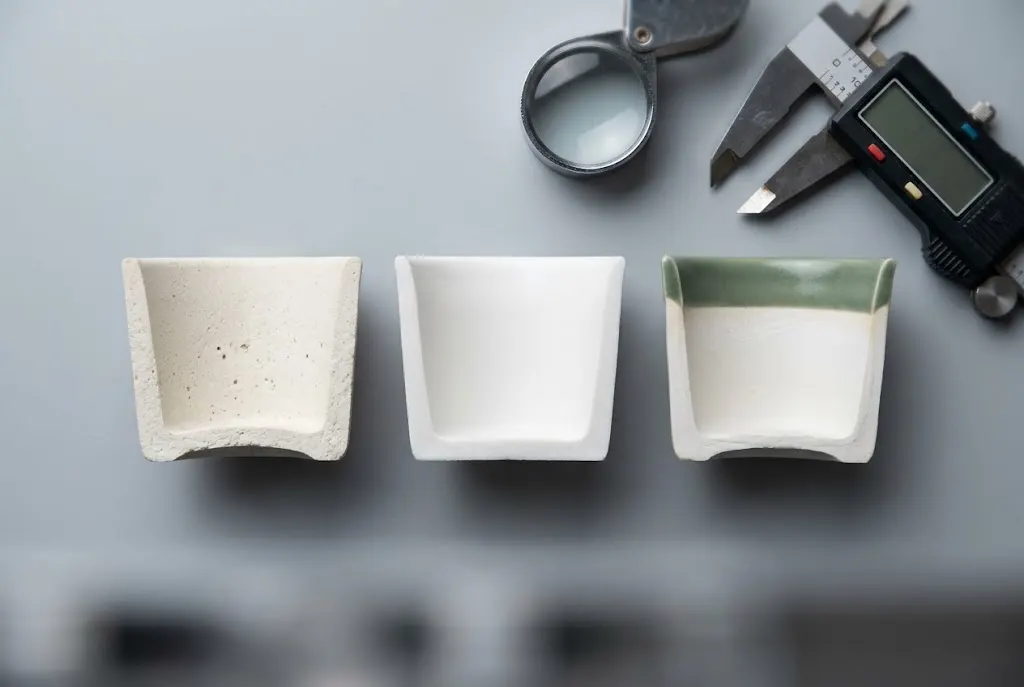
The important structural point is that the first two bodies differ inside the material, while the third differs on top of it. A reinforced or magnesium mug is one material throughout, so a chip exposes more of the same material. A colour-glazed mug is a body plus a coating, so a chip exposes the body underneath it — and that is a much louder visual defect. Section 7 comes back to why this single difference drives so many first-order complaints.
One more framing worth keeping: none of these three is a quality grade. They are fit-for-purpose options. A reinforced body is not “better” than a magnesium one — it is better at surviving handling, and worse at delivering a bright white surface for a design that needs one.
3. Reinforced Porcelain: Built for Handling
Reinforced porcelain raises the alumina content of the body. Fired at high temperature, that produces a denser internal structure and measurably better mechanical strength. In practice it is the body that survives the three things that actually break mugs: stacking in service, washing as part of a process, and freight.
Its practical profile:
- Resists chipping and impact, particularly at the rim and on the handle where damage usually starts.
- Stable thermal behaviour — a body fit for microwave and dishwasher use.
- Predictable across large runs, because a denser body is less sensitive to small firing variations than a glaze-driven finish.
What you give up for that
Whiteness. A high-alumina body tends to read as a slightly warmer off-white next to a magnesium body, and no amount of glaze makes the two identical side by side. For most applications this is invisible. For a design that depends on a pure white ground — fine-line illustration, a pale pastel palette, subtle logo contrast — it is a real constraint, and it is much cheaper to discover that at sample stage than after 5,000 mugs.
This is the body to reach for when handling volume and replacement rate matter more than visual purity: hospitality and café service, office and staff programmes, corporate gifting at volume, anything where the mugs are stacked, washed and moved rather than admired. For the physical design decisions that sit on top of the body — balance, handle geometry, rim thickness — see our guide to ergonomic ceramic mug design.
4. Magnesium Porcelain: Whiteness and Its Price
Magnesium porcelain uses magnesium-rich minerals in the body and is typically fired above 1280 °C. The result is the body most people picture when they think of good ceramic: a clean, high-whiteness surface, fine grain, and a balanced weight that feels considered in the hand.
- Higher surface whiteness — which is not a cosmetic nicety but a functional advantage: it gives printed and engraved artwork more contrast to work against, so fine detail holds up better.
- Smooth, refined hand-feel — the characteristic most often described as premium, and the one buyers and end users react to before they can articulate why.
- Good overall strength, with the caveat that follows.
The caveat: whiteness needs controlled conditions
Magnesium bodies are generally less impact-tolerant than reinforced porcelain. They are the right choice when visual presentation is central and usage conditions are reasonably controlled — retail shelves, gifting, home and office use, premium lifestyle positioning. They are riskier where mugs are stacked hard, washed industrially, or shipped without robust packaging.
A second, quieter caveat concerns batch consistency. Because the whiteness that makes this body attractive is a property of the fired ceramic itself, it is sensitive to firing variation in a way that a colour-glazed surface is not. If you are reordering across a long programme, agree a physical reference sample and a stated whiteness expectation rather than assuming every run will match the first. Aesthetic finish choices layered on this body — matte versus glossy, soft-touch versus polished — are covered in why matte frosted ceramics work for brand identity.
5. Color Glazed Porcelain: The Highest-Variance Option
Colour-glazed porcelain gets its appearance from pigmented glaze layers applied to the body. The base can be similar to either of the other two bodies — the glaze becomes the defining feature, which is exactly why it is the most expressive option and the one with the most to go wrong.
| What you gain | What it introduces |
|---|---|
| Strong visual differentiation — a brand can own a colour, including an exact match to its identity | Heightened sensitivity to firing control. Colour is produced by a process, and processes drift. |
| Colour can be matched across a range, not confined to one product | Colour variation between batches becomes a live quality question rather than a theoretical one |
| Works well with tone-on-tone and debossed decoration | Surface durability depends on glaze formulation and thickness — two things most buyers never see stated |
| Can express seasonal or limited-edition themes cheaply | Requires tighter quality control and a clearer written definition of acceptable variation before production |
The two things to settle before you approve a colour glaze
First, define “acceptable variation” in writing. Every colour-glazed run varies. The failure is not the variation itself, it is the absence of an agreed limit — which leaves you with no basis to reject a batch and no basis to accept one without argument. Fix a physical approved sample and a stated tolerance.
Second, treat the glaze as a food-contact material in its own right. This is the point most often missed. Lead has historically been used as a component of ceramic glazes and decorative decals, which is precisely why regulators single glazes out: the United States requires that ornamental or decorative ceramicware not intended for food use carry explicit warnings about lead in the glaze and the risk of lead poisoning if food is consumed from it[3]. For drinkware, the equivalent discipline is a documented, food-safe glaze and a migration test on the finished article — not an assurance that “it’s food grade”. The depth of that subject, including what can migrate and how it is tested, is covered in heavy metal leaching in ceramic and glass drinkware.
On colour strategy itself — how many colours a programme can carry before it fragments, and why most brands get this wrong — see the visibility tax. The remainder of this article stays on the body and the paperwork.
6. The Specifications to Write Into a Purchase Order
This is the section that makes the body decision enforceable. “Porcelain mug” is not a specification. Without the items below stated in writing, the body you receive is whatever the line happened to be running — and you will have no standing to reject it.
| Specify this | Why it is the item that matters |
|---|---|
| Body type and its distinguishing property | Not just “porcelain” — high-alumina reinforced, magnesium porcelain fired above 1280 °C, or a named base body plus pigmented glaze. This is the sentence that separates one quotation from another. |
| Water absorption ceiling | The standard measure of how dense and vitrified a ceramic body is. A lower ceiling means a denser body — better strength, better thermal behaviour. It is the single most useful number for comparing two “porcelain” quotations that claim to be the same thing. |
| Surface whiteness target, with a reference sample | Whiteness is not measured aesthetically at approval stage; it is fixed by a physical approved sample that later runs are matched against. Without this, order two will differ from order one and you will have no agreed basis to object. |
| Glaze formulation and thickness | On a colour-glazed body, this is the product. Thickness affects both appearance and how the surface wears; formulation affects whether it is food-safe. |
| Colour tolerance for glazed bodies | A stated acceptable deviation, or a physical reference approved by both sides. This converts “the colour is a bit different” from an argument into a pass/fail check. |
| Thermal shock requirement | State the temperature swing the mug must survive (for example, dishwasher exit to a cold surface). Ceramic failures from thermal stress are entirely preventable and entirely a specification matter. |
| Dishwasher-cycle durability claim | The number of cycles the finish and the decoration are warranted to survive — and the test behind the number, rather than an assurance. |
| Food-contact documentation per destination market | A migration report naming the standard and the article tested, covering the body and the glaze, for the markets you sell into. |
| Decoration method and its durability | Handled separately from the body, but it fails on the same surface. Compare methods in ceramic mug printing techniques. |
A supplier who cannot state these is not necessarily a bad supplier — but they are an unmanaged one, and on a ceramic order that means the body you receive is a matter of chance. The practical test is simple: if you laid two quotations side by side, could you tell which body each one actually specified? If not, neither is a specification yet.
7. How Each Body Fails — and What That Costs You
Buyers usually compare bodies on their strengths. It is more useful to compare them on their failure modes, because that is what generates returns, reviews and reorders. Each of the three fails differently, and the cost of each failure is different in kind.
| Body | Characteristic failure | How loud it is to a customer |
|---|---|---|
| Reinforced | Least likely to chip, so failure skews towards glaze wear and staining over years of use | Quiet — gradual wear reads as age, not as defect |
| Magnesium | Chipping at the rim and handle under impact — stacking, transport, dishwasher cycles | Moderate — chips on a white body show as dirt-grey edges, and buyers notice chipped rims |
| Color glazed | Three distinct modes: colour variation between batches, firing defects such as pinholes or blistering, and glaze chipping | Loud — a chip on a coloured mug exposes the body beneath, so a small fault becomes a strong visual contrast; and batch-to-batch colour drift is visible across a whole programme |
Two conclusions follow from reading the table this way:
- The failure modes are not interchangeable in cost. A worn glaze on a reinforced body is a reorder signal. A chipped colour-glazed mug is a complaint, and colour drift across a limited-edition run can be a refund event.
- The more expressive the body, the more the quality burden moves to you as the buyer. A reinforced body is forgiving of an underspecified brief. A colour glaze is not — which is why Section 6 exists.
This is also where packaging stops being a logistics detail and becomes part of the body decision. A magnesium or colour-glazed body specified for premium appeal, then shipped in packaging designed for a heavier reinforced mug, is a predictable source of rim damage in transit. The structural and cost side of that is covered in custom mug packaging for B2B.
8. Verification: What to Test and Against What
Whatever body you choose, the verification obligations are set by where you sell, not by the body type. The table below maps each concern to the framework that governs it, so a purchase order can reference something real rather than a phrase like “food grade”.
| Concern | What governs it | What to ask for |
|---|---|---|
| Lead and cadmium migrating from the glaze | In the EU, ceramic articles intended to contact foodstuffs are governed by Council Directive 84/500/EEC, which sets migration limits for lead and cadmium — including separate limits for hollow articles such as cups and mugs[1]. The general food-contact framework sits in Regulation (EC) No 1935/2004[2] | A migration test report naming the test method, the laboratory and the article tested — on the finished, decorated mug |
| Lead in glaze and decoration | In the United States, lead is specifically recognised as a component of ceramic glazes and decorative decals, and decorative ceramicware not suitable for food use must carry explicit warning labelling about lead in the glaze and the risk of poisoning if food is consumed from it[3] | Written confirmation that both the glaze and any decal are food-contact suitable — and that no food-use prohibited warning would be required |
| Food-contact suitability for ceramics generally | China operates the GB 4806 series of national food safety standards for materials in contact with food; GB 4806.4 addresses ceramic articles[4]. Most China-based ceramic programmes are built against it | A test report citing the standard, the method and the article — the absence of one is itself a signal |
| Surviving repeated washing | The mechanical dishwashing resistance of utensils is covered by a dedicated European standard, EN 12875, in parts addressing domestic articles and rapid testing of ceramic and glass articles[5] | A stated cycle count with the test behind it, not a claim that the print “is dishwasher safe” |
| Body strength and density | Water absorption and thermal shock behaviour are the standard measures of how vitrified a body is — the properties that make a reinforced body more impact-resistant than a magnesium one | A stated water absorption ceiling and a tested thermal shock range on the specified body |
| Batch consistency | Not a regulatory matter, but the most common commercial dispute in colour-glazed programmes | A physical approved sample held by both sides, plus a written tolerance, retained across reorders |
Two rules make this manageable. Ask for documents against a named standard, not against a word. “Food grade”, “premium” and “lead-free” are claims; a report naming a standard, a method and the article tested is evidence. Test the finished article, not the material. A glaze that passes as a raw material can still fail once it has been applied, fired and decorated. For how migration testing is performed on finished drinkware, see food-contact migration testing, and for the certification language that is defensible on packaging, food-grade certification standards.
9. Matching Body to Scenario
The body should follow the conditions the mug will actually meet, not the impression the sample makes in a meeting. Four questions settle most cases.
| Question | Answer pointing to reinforced | Answer pointing to magnesium or colour glaze |
|---|---|---|
| How hard is the mug handled? | Stacked, washed in volume, moved daily — café, hotel, staff kitchen | Used one at a time and washed by hand or at home |
| Does the artwork need a bright white ground? | No — bold marks, solid logos, high contrast holds on off-white | Yes — fine line, pale palette, photographic or gradient artwork |
| Is colour the product’s main signal? | No — brand is carried by the logo | Yes — the colour is the identity, and an exact match matters |
| Can you manage a tolerance conversation? | Not needed — this body is forgiving of an underspecified brief | Required — a colour glaze without an agreed tolerance is a dispute waiting to happen |
The pattern
Where handling is heavy, reinforced. Where presentation is central and conditions are controlled, magnesium. Where colour is the point, a colour glaze — with the tolerance work done first. Two left-hand answers or more, and a reinforced body is the economical specification rather than the cautious one. Three or four right-hand answers means you are buying a look, and the look needs the paperwork behind it to survive.
There is also a legitimate staged route that many brand programmes take: start on a body you know is robust for the first order, then move to the body that best expresses the brand once sell-through is proven. The mug geometry and the artwork transfer; only the body changes. Comparing the economics of that kind of staged approach is covered in whether small-batch customization is really expensive. For brands building a first merchandise line at all, see first merch strategy for new coffee brands.
10. FAQ
Which of the three is the best porcelain for custom mugs?
There is no best — there is a best fit. Reinforced porcelain wins where mugs are handled hard and replacement rate matters. Magnesium porcelain wins where presentation, whiteness and hand-feel are central and conditions are controlled. Colour-glazed porcelain wins when the colour is the brand signal and you are prepared to define tolerances properly. Choosing on appearance alone is the mistake; choosing on the conditions the mug will meet is the discipline.
Is colour-glazed porcelain less safe than the other two?
Not inherently — it carries a different risk profile that has to be documented rather than assumed. Because the glaze is a separate applied layer, it is a separate food-contact material: the reason regulators single out glazes is precisely that lead has historically been used in them[3]. A food-safe, documented glaze on a tested finished article is not a safety problem. An undocumented one is an unknown, which is a different thing from a risk and should be treated as such.
Does the body affect how well the logo prints?
It affects contrast and consistency rather than printability. A whiter body gives fine artwork more to work against; a colour-glazed body can support tone-on-tone treatments that would be invisible on white. On a colour-glazed surface, firing behaviour also interacts with the decoration — worth testing on the actual glaze batch rather than on a generic sample mug. Method-by-method detail is in ceramic mug printing techniques compared.
Why does colour vary between two orders of the same mug?
Because colour is produced by a firing process, and every firing differs slightly. This is normal in ceramics rather than a defect. What makes it a problem is the absence of an agreed reference: without a physical approved sample held by both sides, neither party can say whether a batch is within tolerance. Fix the sample and the tolerance at first approval, and reorders become a comparison instead of an argument.
Can I change body type on a reorder?
Usually yes, provided the geometry is unchanged and the decoration method suits the new surface — but expect the colour and the tolerances to be re-agreed, because the body is what those tolerances were defined against. Treat a body change as a new sample cycle rather than a variation of an existing order. If the change is also a volume change, its economics are worth working through first; see small-batch vs volume economics.
Does a heavier mug mean a stronger one?
No, and this is one of the more persistent myths in the category. Weight reflects wall thickness and geometry more than body quality. Strength comes from how dense and vitrified the fired body is — which is why the useful procurement number is a water absorption ceiling rather than a weight in grams. A thick-walled magnesium mug can feel substantial and still chip more readily than a thinner reinforced one.
Choosing a porcelain body for a custom mug programme?Tell Mofecup the conditions the mug will meet — how it is handled, where it is sold, how the brand expresses itself — and we will come back with a body recommendation and a written specification rather than a bare price: body type and its distinguishing property, water absorption ceiling, whiteness reference, glaze formulation for glazed bodies, thermal shock and dishwasher-cycle claims with the testing behind them, and the food-contact documentation your markets require. We will also say plainly when a cheaper body is the right answer for your scenario. Request a quote →
11. Partner With Mofecup on a Ceramic Mug Programme
Mofecup produces custom ceramic mugs for brands, hospitality operators, corporate gifting programmes and private label. Our role on the body is to translate the scenario into a specification a production partner can hit — and to keep that specification stable across reorders.
In practice that means:
- Body selected against use conditions, not against a sample photo — reinforced, magnesium, or a colour-glazed specification with tolerances agreed up front.
- A written specification with the numbers in it — body type and its distinguishing property, water absorption ceiling, whiteness reference, glaze formulation and thickness where relevant.
- Reference samples held on both sides, so reorders are checked against something physical rather than remembered.
- Glaze and decoration treated as separate food-contact materials, with the documentation for your destination markets — EU[1], US[3] or China[4] as applicable.
- Durability claims that come with tests — thermal shock range and dishwasher-cycle performance against recognised methods[5], rather than an assurance.
- Decoration matched to the body — see printing techniques compared — and packaging rated for the body it carries, per our mug packaging guide.
- Both bodies quoted when the choice is close, so the trade-off is a costed decision rather than a judgement call.
For the wider material picture — where ceramic sits against stainless steel and glass for your application — see how to choose the right custom drinkware material and our materials by application guide. Or send your brief and we will respond with the body recommendation, the specification and the costed option.
Footnotes & References
[1] Council of the European Union. Council Directive 84/500/EEC on the approximation of the laws of the Member States relating to ceramic articles intended to come into contact with foodstuffs — sets migration limits for lead and cadmium, including separate limits applicable to hollow articles such as cups and mugs. eur-lex.europa.eu
[2] European Parliament and Council. Regulation (EC) No 1935/2004 on materials and articles intended to come into contact with food. eur-lex.europa.eu
[3] U.S. Electronic Code of Federal Regulations. 21 CFR § 109.16 — Ornamental and decorative ceramicware. States that lead is a toxic metal used as a component of glazes and decorative decals on ceramics, and requires warning labelling on ornamental or decorative ceramicware that is not to be used for food-handling purposes. ecfr.gov
[4] National Health Commission of the People’s Republic of China. GB 4806.4 — National food safety standard: Ceramic articles in contact with food (食品安全国家标准 · 食品接触用陶瓷制品), part of the GB 4806 series for food-contact materials. chinesestandard.net
[5] European Committee for Standardization (CEN). EN 12875 — Mechanical dishwashing resistance of utensils. Parts 1–4 cover reference test methods for domestic articles and rapid tests for ceramic and glass articles.