
Four Levers, One Spec Sheet
How Packaging Architecture Sets Average Order Value
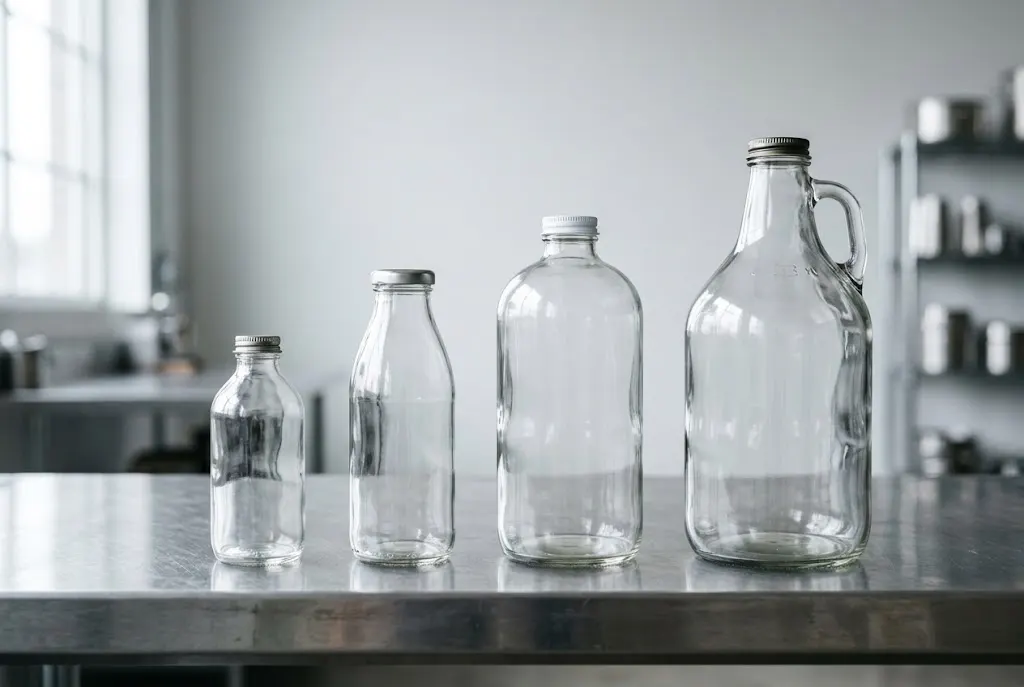
Table of Contents
- 1. AOV Is a Specification Problem, Not a Promotion Problem
- 2. What Actually Moves Average Order Value
- 3. Lever 1 — The Capacity Ladder
- 4. Lever 2 — Multi-Pack Architecture
- 5. Lever 3 — Subscription-Ready Bottles
- 6. Lever 4 — Refill and Return Loops
- 7. Where Glass Stops: Pressure, Heat and Weight
- 8. The Cost Side: Tooling, MOQ and Payback
- 9. The Spec Sheet to Lock Before Tooling
- 10. FAQ
- 11. Partner With Mofecup on a Bottled Beverage Programme
1. AOV Is a Specification Problem, Not a Promotion Problem
Cold brew brands usually attack average order value with the tools marketing already owns: a discount code, a free-shipping threshold, a bundle banner in the cart. Those tools work. But they all operate on a number that was fixed long before the customer arrived — at the sampling stage, in a bottle specification that nobody in marketing was ever asked to sign off on.
That is the part worth being precise about. A 12 oz single-serve bottle places a hard ceiling on what one line item can be worth, no matter how good the offer is. A 32 oz format removes that ceiling. A bottle that comes out of twenty commercial wash cycles still clear supports a refill programme; one that hazes at cycle six does not, however well the programme is marketed. The commercial lever and the packaging specification are the same decision seen from two ends.
This article does the sourcing job on that decision. It covers what each commercial lever actually demands from the bottle, what those demands cost at the tooling and MOQ stage, and which parameters have to be locked before a mould is cut — because after that point, changing any of them is a new project rather than an adjustment.
Where this fits with our other guides
This article covers the commercial model layer — how order value is engineered through packaging. Adjacent decisions live elsewhere:
Which drinkware a coffee or tea brand should actually buy (categories, volumes, pricing benchmarks) → custom drinkware for coffee and tea brands
Glass chemistry (borosilicate vs soda-lime, thermal and mechanical behaviour) → borosilicate vs soda-lime glass drinkware
How minimalist design supports a higher retail price → why minimalist glass bottles command higher margins
Transparent materials compared (glass vs Tritan vs polypropylene) → glass vs Tritan vs polypropylene bottles
Which material family at all → choosing the right custom drinkware material
Bottle geometry itself → size and shape guide and mouth and neck design guide
2. What Actually Moves Average Order Value
There are four levers that raise order value in a bottled beverage line, and they are not interchangeable. Each one moves a different number, depends on a different bottle property, and adds a different cost. The mistake most brands make is choosing the lever by how it is marketed rather than by what it requires from the packaging.
| Lever | What it moves | The bottle variable it depends on | What it costs to enable |
|---|---|---|---|
| 1. Capacity ladder | Price per line item | Volume tier, neck finish, mould geometry | One mould per format, amortised over order volume |
| 2. Multi-pack architecture | Units per transaction | Carton cube, dividers, transit strength | Packaging material, transit testing, freight profile |
| 3. Premium tier | Price tolerance | Glass colour, embossing, decoration method | Decoration tooling and a higher minimum run |
| 4. Refill / return loop | Repeat purchase rate | Bottle durability, thread wear, wash resistance | Wash logistics, spare seals, heavier wall if needed |
Read down the last column and a pattern appears: every one of these levers is paid for before the first bottle is sold. Promotion-led AOV is a cost on margin that recurs every time you run it. Specification-led AOV is a one-time cost that keeps paying. That is the trade this article is about.
3. Lever 1 — The Capacity Ladder
The simplest way to raise order value is to offer the same product in a larger container and price it above the linear multiple. Customers understand this instantly, which is exactly why it works: the decision is about how much cold brew they want, not about whether they are being upsold.
What the ladder looks like in practice depends on the channel. A useful reference across the ready-to-drink cold brew category:
| Format | Typical volume | Role in the ladder | Sourcing consequence |
|---|---|---|---|
| Single serve | 8–12 oz (approx. 240–355 ml) | Trial and entry point. Low commitment, lowest price. | Smallest mould, highest unit cost per millilitre |
| Share / desk | 16–25 oz (approx. 473–750 ml) | The volume workhorse. Where most revenue should sit. | Mould cost recovered fastest at this tier |
| Multi-serve | 32 oz (approx. 946 ml) | Household and small-office. Clear step up in price. | Heavier filled weight — check transit packaging |
| Growler | 64 oz (approx. 1.9 L) | The top rung, and the anchor that makes the 32 oz look reasonable | Largest mould; handle or grip geometry becomes a real design task |
Why the top rung matters more than it looks
The 64 oz growler is rarely the best seller. Its job is to sit at the top of the price list and make the 32 oz tier read as the sensible middle choice. Remove the top rung and the 32 oz becomes the expensive option instead of the moderate one. This is standard price architecture, and it only works if the top rung physically exists — which means a mould for a format you may sell in small quantities.
That is the first real trade-off in this whole subject: the anchor format can be worth tooling even when its own margin is thin, because its commercial function is to reposition the formats below it. The arithmetic is in section 8.
Two sourcing details that quietly break capacity ladders
Neck finish consistency. If the 12 oz and the 32 oz take the same closure, the necks must share a finish specification. Bottles from different moulds with nominally identical finishes are where cap leaks and torque failures originate. Decide deliberately: shared finish for closure economy, or different finishes for format-specific closures. What you must not do is assume they match. Neck and thread design is covered in our mouth and neck design guide.
Fill-line compatibility. A capacity tier that your co-packer’s line cannot fill accurately is not a capacity tier. Confirm the fill range and the changeover time your bottler needs before the mould is cut, not after.
4. Lever 2 — Multi-Pack Architecture
Selling four or six bottles as one unit raises order value without asking the customer to change how they drink. It is the most reliable lever in the set — and the one where packaging engineering has the most influence over whether the margin survives.
The commercial calculation is not simply four times the unit price. A multi-pack carries its own costs: the carton, the dividers, the additional weight in freight, and the breakage risk that comes with moving more glass per parcel. Those costs vary enormously with pack size, and the variation is not linear.
| Pack format | What it is for | Packaging demands | Where the margin goes |
|---|---|---|---|
| Variety pack (different flavours) | Trial across the range, gift and sampling | Larger carton face for labelling; slot dividers per bottle | Labour-heavy packing, many SKUs in one parcel |
| 4-pack / 6-pack (same SKU) | The main AOV engine for DTC and retail | Cell dividers, top pad, carton rated for stacked load | Carton and divider material; heavier parcels cost more to move |
| 12-pack case | Monthly supply, subscription, office accounts | Full shipper with internal bracing, stack-strength rating | Oversize freight bands; pallet and palletisation decisions |
The breakage question nobody costs
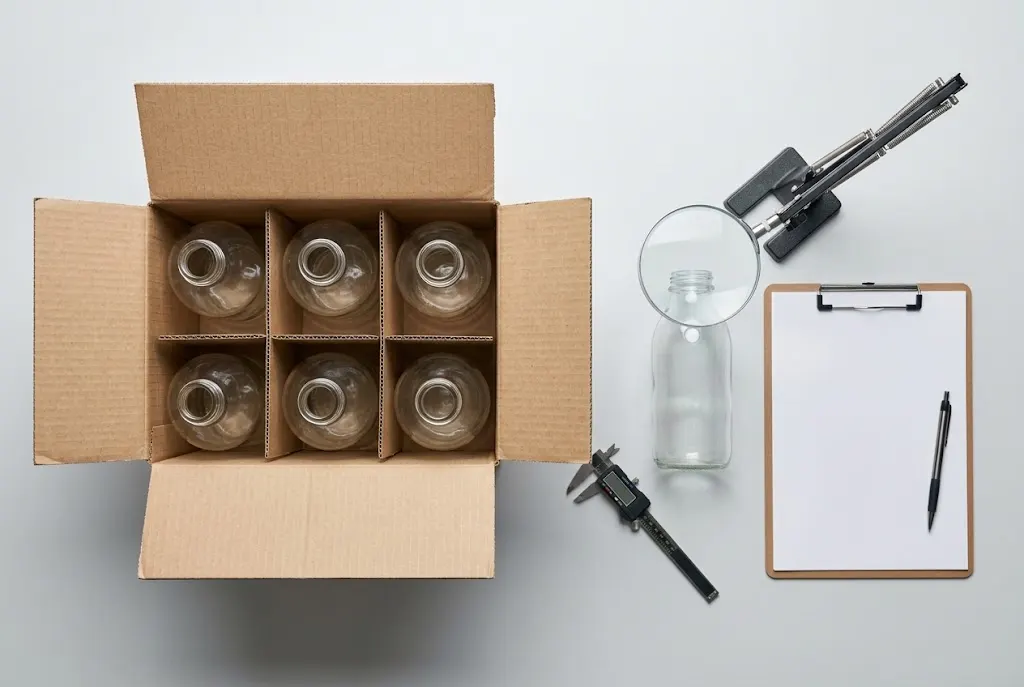
Glass in a parcel is a different engineering problem from glass on a shelf. Bottles touching each other in transit are what produce the chipped shoulder a customer photographs for a refund. The fix is structural: cell dividers that hold each bottle clear, a carton wall thick enough for the stacked load, and a tested configuration rather than an assumed one.
This is where a transit test stops being paperwork. A distribution simulation protocol — ASTM D4169 is the standard reference for shipping container performance testing, and ISTA series tests cover the parcel environment — tells you whether the pack you designed survives the journey before you ship ten thousand of them. Our transit durability guide covers how those tests map onto drinkware packaging.
One more structural point: the pack format is also a shelf format. A 6-pack that is easy to lift off a retail shelf sells differently from one that is not. The carton is not just protection — it is the surface a shopper reads first.
5. Lever 3 — Subscription-Ready Bottles
Subscription revenue depends on the bottle in a way that is easy to miss. If the format is one a customer reuses, the subscription looks like a supply service and retention stays high. If it is one they throw away, every shipment is a small argument about waste — and the cancellation reason is environmental, not commercial.
That reframes the sourcing question. A subscription format should be specified as a durable object that happens to arrive full, not as a beverage container. Three properties carry that weight:
- Wash durability. If the bottle is going into a dishwasher, the decoration has to be specified for it. A label or print that fades at cycle ten turns a premium subscription into a shabby one. Our dishwasher safety guide covers what the claim actually requires.
- Thread and seal life. Reused closures wear. Where a bottle is opened and closed weekly for a year, the closure is a wear part, and designing it as a replaceable component rather than a disposable one is a deliberate choice. See leak testing standards for how that claim gets verified.
- Decoration that survives handling. Print applied to glass is a separate layer with its own adhesion behaviour. Which method suits a bottle expected to be handled daily is a materials decision, not a design preference — see logo application methods compared.
A subscription also changes what you order. Recurring shipments with a reusable format mean the customer accumulates bottles, so a modest per-shipment bottle count is usually right — the goal is a format they are happy to keep seeing on the shelf, not a stockpile.
6. Lever 4 — Refill and Return Loops
A bottle return programme is the only lever on this list that lowers packaging cost while raising visit frequency. Every returned bottle that goes back into service is a bottle you did not buy — and the customer who returns it is standing at your counter with a reason to buy something else.
Two things have changed the economics of this in the last few years, and both are worth knowing before you design a programme.
Regulation is now pushing in the same direction as the margin
The European Union’s packaging and packaging waste regulation sets requirements for recyclability and reuse on packaging placed on the EU market, and the European Commission maintains the current framework and its implementation alongside the wider single-use plastics rules[1][5]. For a beverage brand, the practical read is that packaging decisions are increasingly subject to reuse and recyclability expectations rather than left to preference. A return programme built on a genuinely reusable bottle is on the right side of that trend; a single-use glass format marketed as sustainable is on the wrong side of it, and the claim is the part that gets challenged.
Recycling rates are the other half of the picture. Glass is a genuinely closed-loop material — it can be recycled repeatedly without degradation of the material itself — which is a strong position to be in, and it is why the material-specific data maintained by the US Environmental Protection Agency is worth reading before any recyclability claim goes on a package[2]. The rule for claims is simple: claim what you can document for your own supply chain, not what is generally true of the material.
What a returnable bottle has to be specified for
Refillable glass is engineered for a working life measured in trips rather than uses. The parameters that determine that life are set at the mould:
| Parameter | Why it decides whether the loop works | Locked when |
|---|---|---|
| Wall thickness and distribution | Thin shoulders and bases scuff through first. Even wall distribution is what buys trips. | Mould design — cannot be revised later |
| Neck finish and thread form | Repeated capping and decapping wears threads. A robust thread form keeps sealing to the end of life. | Mould and closure selection |
| Decoration method | Appearance decay is the main reason a refillable bottle gets retired early. | Sample approval |
| Closure and seal as a replaceable part | The gasket fails before the glass does. Specify replacement rather than replacement of the bottle. | Component specification |
One honest caveat: a return loop is a logistics programme before it is a packaging programme. Collection points, wash validation and the cost of moving empty glass back all have to work before the bottle does. Design the bottle for the loop you can actually operate.
7. Where Glass Stops: Pressure, Heat and Weight
A guide that only lists advantages is not useful for purchasing. Three properties of glass constrain what a cold brew programme can do, and each of them shows up as an AOV problem if it is discovered late.
Glass bottles are not pressure vessels
A standard food-grade glass bottle is specified for still or near-still products. It is not designed to contain internal pressure. Carbonated formats and any nitro product that must hold dissolved gas under pressure belong in a container engineered for that duty — which is a different specification, and often a different material. If a nitrogen-served line is part of the plan, that is a packaging-format decision to settle before anything else, not a variation on a still-product bottle. Where pressure containment is part of the specification, it gets verified rather than assumed — see pressure and burst testing.
Weight is a line item, not a footnote
An empty glass bottle weighs roughly an order of magnitude more than the equivalent plastic container. That difference is paid on every movement — inbound freight, outbound parcel, and the returns leg of a refill loop. For a heavy multi-pack it can be the difference between one freight band and the next.
None of this argues against glass. It argues for doing the freight arithmetic with the format decision, because a capacity tier that looks profitable per unit can lose its advantage once the parcel is weighed. If a lighter transparent alternative is being considered for exactly this reason, the comparison is in glass vs Tritan vs polypropylene.
Breakage compounds with pack size
More glass per parcel means more contact surfaces, more mass in the same drop, and a higher cost per incident when something fails. This is not an argument for smaller packs — it is an argument for testing the pack you actually intend to ship rather than extrapolating from a single-bottle result.
On the food-contact side, glass has a favourable position: it is an inert material that does not require the additive and migration scrutiny applied to plastics. That is one reason the regulatory discussion around food-contact plastics — the FDA’s food-contact framework in the United States[3][4], and the ongoing work on substances such as bisphenol A in the EU[6] — rarely lands on glass. That is a real, documentable advantage when a brand is choosing a format for a premium position.
8. The Cost Side: Tooling, MOQ and Payback
Here is where AOV strategy meets procurement reality. Every lever above needs an investment made in advance, and the size of that investment is mostly driven by one thing: how many distinct formats and decorations you put into the project at once.
| Cost line | Driven by | How it behaves as volume rises |
|---|---|---|
| Mould / tooling | Number of distinct bottle formats | Fixed. Amortises toward zero per unit as volume grows — the strongest argument for consolidating formats |
| Decoration setup | Number of colours, methods, artworks | Fixed per artwork. Every extra SKU adds its own setup |
| Unit price | Order quantity against the supplier’s break points | Steps down at each break. Buying across fewer formats keeps you in deeper bands |
| Packaging components | Cartons, dividers, closures | Recurs with every order — this is ongoing cost, not investment |
| Sampling and testing | Number of concepts, rounds, and whether transit testing is done | Fixed per project. The cheapest place to find a mistake |
The payback question to ask before you commit
For any new format, the useful question is not “what does the mould cost” but “how many units of incremental gross margin does it take to pay back the mould and the setup, and how many months of normal sell-through is that?” A top-rung anchor format can be justified on the price repositioning it delivers even where its own units are few; a fourth decoration variant usually cannot.
The other half of payback is what you avoid. Because these costs are fixed, the biggest saving available in most projects is not ordering formats you will not sell. Fewer formats, deeper quantities, lower unit cost — and a price ladder that still has its rungs. The economics of small versus large runs are worked through in whether small-batch customisation is really expensive, and the ordering mechanics in MOQ, lead time and payment terms and our B2B ordering guide.
9. The Spec Sheet to Lock Before Tooling
Everything in this article collapses into one document. These are the parameters that determine whether an AOV programme is achievable, and the point at which each one stops being adjustable.
| Parameter | Decide it by asking | Cost of locking it late |
|---|---|---|
| Format count | How many rungs does the ladder actually need, and what does each one do commercially? | A new mould and a new amortisation base |
| Neck finish, shared or not | Do the tiers share one closure? Who owns the closure tooling? | Mismatched closures, leaks, a second closure order |
| Wall thickness | Is this a one-trip package or a returnable one? | A refill programme that fails on appearance, not on logistics |
| Decoration method and durability claim | Will it be washed? How many cycles must it survive, and is that tested? | A premium claim you cannot substantiate |
| Pack format and carton rating | What is the shipped configuration, and has it been through a transit test? | Damage claims at scale, from a pack never tested as shipped |
| Food-contact documentation | Which markets, and what does each one require on file? | A container that clears the shelf in one market and stalls in another |
| Reference sample | Which physical sample defines “correct” for the next two years? | Reorders that become disputes instead of checklists |
Sampling is where this list gets settled, and it is the cheapest stage at which to change your mind. Our sampling process guide covers what a useful sample round should produce, and the wider material and application picture sits in the materials by application guide.
10. FAQ
Does a larger bottle really raise average order value?
Only if the price ladder is designed, not just extended. A larger format raises AOV when it is priced above the linear multiple and positioned so the middle rung reads as the sensible choice. Simply adding the biggest bottle at a proportional price adds an option without moving the average. The lever is the relationship between the rungs, which is why the anchor format matters more than its own sales volume.
What bottle sizes work best for cold brew?
There is no single answer, but the working range is well established: 8–12 oz for single-serve trial, 16–25 oz for the volume tier where most revenue should sit, 32 oz for household and small-office use, and 64 oz as the top anchor. The right number of tiers is usually three, and rarely more than four — every additional format is another mould, another decoration setup and another SKU. What matters is that each rung earns its place commercially, not that the range looks complete.
Can a glass bottle be used for nitro cold brew?
Not if the product must hold gas under internal pressure. Standard food-grade glass bottles are specified for still or near-still contents, not as pressure vessels. A nitrogen-infused format that depends on retained pressure needs a container engineered for that duty, which is a different specification. Settle this before the format is chosen — it determines the whole packaging direction, not a detail within it.
Is glass better for cold brew than plastic?
For flavour protection and premium positioning, glass is the stronger choice: it is inert, it does not interact with the contents, and it carries a quality signal consumers read immediately. For weight, freight cost and breakage risk, plastic is the stronger choice, and those costs land hardest on multi-packs and refill loops. The right question is which of those two cost profiles fits your channel — a DTC programme with heavy parcels may reach a different answer from a café-based programme. The material comparison is set out in glass vs Tritan vs polypropylene.
How many formats should we order for a first run?
Fewer than feels comfortable. Tooling and decoration setup are fixed costs, so each format you add raises the volume each one must sell to pay back. A common and workable approach is two formats plus one shared decoration: enough to build a price ladder, few enough to buy at a real quantity break. Formats can be added once sell-through data justifies them; the reverse — carrying four formats that each sell poorly — is the expensive mistake.
Can a bottle return programme actually reduce packaging cost?
Yes, provided the bottle is specified for reuse and the loop is operable. Every returned bottle that re-enters service is a bottle not purchased, and the returning customer is on site with a reason to buy again. The conditions are that the bottle is designed for the trips you expect of it — wall distribution and neck thread form are what decide that — and that collection, washing and the return leg of transport are costed before launch. Where the logistics are not operable, a refill programme marketed as sustainable while the bottles are in fact discarded is the worst of both positions. See section 6 for the parameters to specify, and our dishwasher safety guide for what a wash-durability claim requires.
Do we need to test packaging for transit?
If you are shipping glass in multi-packs, yes — and it is cheaper than the alternative. A distribution simulation test against a recognised protocol gives you a qualified pack configuration rather than an assumption, and it is the kind of evidence a retail customer may ask for anyway. Our transit durability guide covers the methods.
What has to be decided before the mould is cut?
Everything structural: how many formats, whether the necks share a closure, whether the bottle is one-trip or returnable, and the decoration method. All of those are set by the mould or by the sample approval that follows it, and all of them are expensive to revisit once production tooling exists. The list in section 9 is the working version. In practice, one-trip versus returnable is the decision most often left until too late, and it is the one with the widest consequences.
Building a bottled cold brew line and want the numbers before you commit?Tell Mofecup the formats you are considering and the volumes you expect, and we will come back with a costed comparison rather than a single price: mould and decoration setup for each option, unit cost at your actual order quantity, the shared-neck options that reduce closure tooling, and a specification covering neck finish, wall thickness, decoration durability and the food-contact documentation your markets require. We will also tell you plainly when one of the formats you are considering does not earn its tooling. Request a quote →
11. Partner With Mofecup on a Bottled Beverage Programme
Mofecup produces custom glass bottles and drinkware for cold brew brands, coffee and tea companies, private label programmes and e-commerce sellers. On a bottled beverage line our role is to turn a commercial plan into a specification that a production partner can hit repeatably — and to say so when part of the plan will not survive contact with tooling.
In practice that means:
- Formats chosen against the price ladder, not against a template range — including a straight answer on which rungs are worth tooling.
- Neck finish and closure strategy agreed across formats, so tier one and tier four do not become two unrelated closure programmes.
- Wall and weight specified against the intended life of the bottle — one-trip or returnable, with the consequences of each stated up front.
- Decoration matched to the wash conditions it will actually meet, with the durability claim defined rather than assumed — see logo application methods compared.
- Pack and transit specification for the configuration you ship, with the testing behind the claim — see transit durability testing.
- Food-contact documentation for your destination markets[7], supplied as files rather than assurances.
- A costed comparison across the formats under consideration, so the decision is made on the numbers it will actually be judged on.
For the wider picture — where glass sits against other transparent materials, and which materials suit which applications — see transparent materials compared and our materials by application guide. If your question is which drinkware categories fit a coffee or tea brand at all, that is covered in custom drinkware for coffee and tea brands. Or send your brief and we will respond with the formats, the specification and the costed options.
Footnotes & References
[1] European Commission, Directorate-General for Environment. Packaging waste — the Commission’s current framework for packaging and packaging waste, including the Regulation on packaging and packaging waste and its requirements on recyclability and reuse of packaging placed on the EU market. environment.ec.europa.eu
[2] U.S. Environmental Protection Agency. Glass: Material-Specific Data — part of the EPA’s facts and figures on materials, waste and recycling, covering generation, recycling and management of glass containers and other glass products in the United States. epa.gov
[3] U.S. Electronic Code of Federal Regulations. 21 CFR Part 174 — Indirect food additives: General. Establishes the general provisions for substances used as components of materials intended for packaging, transporting or holding food. ecfr.gov
[4] U.S. Electronic Code of Federal Regulations. 21 CFR § 177.1520 — Olefin polymers. Specifies permitted olefin polymers and the conditions of use for food-contact applications — the framework that applies to the plastic alternatives compared with glass in this article. ecfr.gov
[5] European Commission, Directorate-General for Environment. Single-use plastics — the EU framework restricting certain single-use plastic items and setting related requirements, maintained alongside the packaging and packaging waste rules. environment.ec.europa.eu
[6] European Food Safety Authority. Bisphenol A — EFSA’s topic page on bisphenol A, including its re-evaluation of the substance and the resulting regulatory action on its use in food-contact materials in the EU. efsa.europa.eu
[7] U.S. Electronic Code of Federal Regulations. 21 CFR § 177.1010 — Acrylic and modified acrylic plastics, semirigid and rigid. Cited here as an example of the substance-specific food-contact clearances that apply to non-glass closures, liners and components of a bottled beverage package. ecfr.gov