Why Custom Drinkware Is a Strategic Asset for Hospitality Brands
In the hospitality industry, every guest touchpoint reinforces brand identity. Custom drinkware — from in-room water bottles and coffee mugs to poolside cups and mini-bar glassware — provides daily brand exposure that guests interact with multiple times per stay. For hotel chains, boutique properties, and hospitality procurement teams, selecting the right drinkware involves balancing aesthetic consistency, durability under commercial use, and cost per room. This guide covers the key drinkware categories for hospitality, material considerations for high-turnover environments, and how to build a cohesive branded drinkware program across your property.
In-Room Amenity Water Bottles: Reusable vs. Single-Use
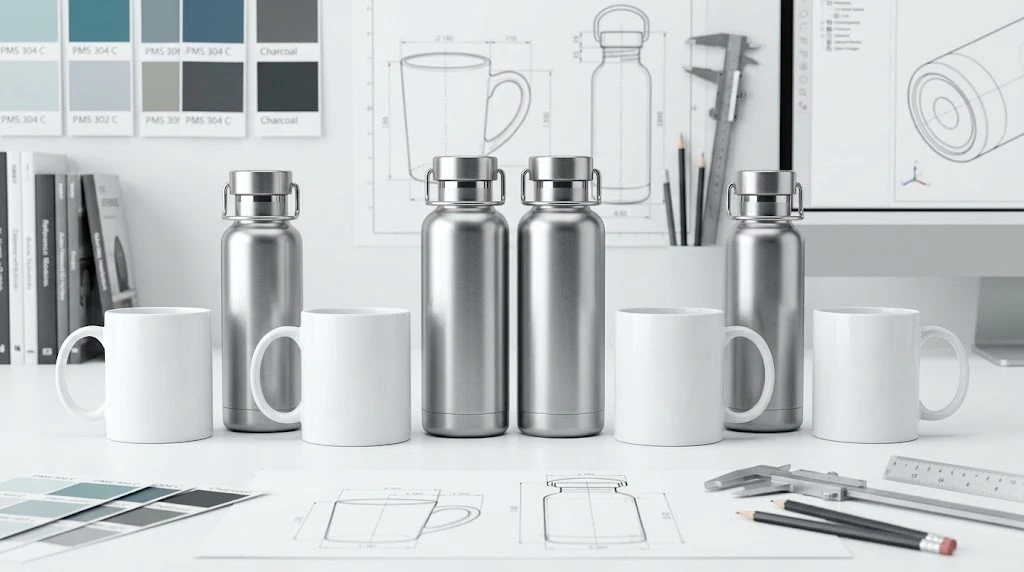
The shift away from single-use plastics has transformed in-room water bottle programs. Many hotels now offer branded reusable bottles as both an amenity and a sustainability statement. The two main options are: Aluminum reusable bottles — lightweight (120–180g for 500ml), excellent print surface for full-wrap branding, recyclable at end of life, and cost-effective at $2–4 per unit at volume. Aluminum bottles are the most common choice for midscale and upscale hotel chains. Stainless steel reusable bottles — heavier but perceived as premium, superior insulation (double-wall vacuum maintains water temperature), and higher per-unit cost ($6–12). Stainless steel bottles suit luxury properties where the bottle itself is a take-home brand souvenir. Some properties offer filtered water stations in hallways with branded stainless bottles as a permanent guest room amenity.
In-Room Ceramic Coffee Mugs
Ceramic coffee mugs are the most personal drinkware item in a hotel room — guests handle them first thing in the morning and often judge room quality by mug feel and appearance. For hospitality procurement, mug durability in commercial dishwashers (500–1,000 cycles per year) is the primary concern. Recommended mug types include: Reinforced porcelain mugs — fired at higher temperatures for chip resistance, with a rolled rim and sturdy handle. Magnesium ceramic mugs — lighter than traditional porcelain, with superior impact resistance and heat retention. Custom branding options for hotel mugs include under-glaze decals (permanent, dishwasher-proof, unlimited colors for logo reproduction) and laser engraving (subtle, permanent etch for minimalist luxury branding). Recommended capacity is 300–350 ml — large enough for a generous coffee serving but stackable for storage and service. For more on ceramic decoration methods, read our ceramic mug printing guide.
Mini-Bar and Poolside Glassware
Custom glassware for mini-bars, poolside service, and restaurant beverage programs requires balance between aesthetics and breakage resistance. Tempered borosilicate glass is the industry standard — heat-resistant for hot beverages and significantly more impact-resistant than soda-lime glass. For branding, sandblasted logos offer a permanent, elegant frosted appearance that survives hundreds of commercial dishwasher cycles. Screen printing on glass with UV-cured inks is also durable and allows full-color logo application. Key considerations for mini-bar glassware include standardized shapes that fit existing shelving and refrigeration, stackable designs for efficient storage, and weighted bases for stability on service trays. For poolside programs, shatter-resistant Tritan or polycarbonate cups are recommended over glass due to safety concerns.
Hospitality Drinkware Material Comparison
| Application | Recommended Material | Key Requirement | Typical MOQ | Cost per Unit (1000) |
|---|---|---|---|---|
| In-room reusable water bottle | Aluminum or stainless steel | Brand surface + dishwasher safe | 1,000–5,000 | $2–12 |
| In-room coffee mug | Reinforced porcelain | Chip resistant, microwave safe | 500–2,000 | $1.50–5 |
| Mini-bar tumbler | Tempered borosilicate glass | Break resistant, dishwasher safe | 2,000–10,000 | $1–3 |
| Poolside / outdoor cup | Tritan copolyester | Shatterproof, UV resistant | 2,000–5,000 | $0.80–2 |
| Restaurant water carafe | Borosilicate glass | Heat resistant, pouring spout | 1,000–5,000 | $2–6 |
Branding Consistency Across All Touchpoints
A cohesive hospitality drinkware program uses consistent branding across all beverage touchpoints while tailoring the delivery format to each use case. The brand logo, color palette, and typography should appear uniformly across reusable amenity bottles, ceramic mugs, glassware, and poolside cups. However, the logo application method and material can differ by item. A sandblasted logo on glassware, under-glaze decal on ceramic mugs, and full-wrap UV printing on aluminum bottles can all carry the same brand identity through different visual treatments. Working with a single OEM supplier for the entire drinkware program simplifies color matching, quality control, and reordering. For hospitality procurement teams, the total cost of ownership (purchase price + replacement cost + laundry durability) matters more than unit price alone. Investing in higher-durability drinkware reduces replacement frequency and long-term costs.
Regulatory and Safety Considerations
Hospitality drinkware must comply with food-contact safety regulations for commercial use. In the US, FDA compliance is mandatory — all materials must meet FDA 21 CFR requirements for food contact. In Europe, EU Regulation 1935/2004 and the REACH chemical safety framework apply. For ceramic mugs, lead and cadmium leachability from glazes and decals must be tested per FDA guidelines or EU standards. For glass and metal bottles, migration testing for heavy metals and overall migration limits should be documented. Hotels increasingly request REACH or Proposition 65 compliance documentation as part of their procurement qualification process. For a full overview, read our food-grade certification guide. To discuss a comprehensive drinkware program for your hospitality property or chain, contact Mofe’s hospitality team for a free consultation.