High-Temperature Decals vs. Screen Printing
Which Logo Method Truly Prevents Fading?
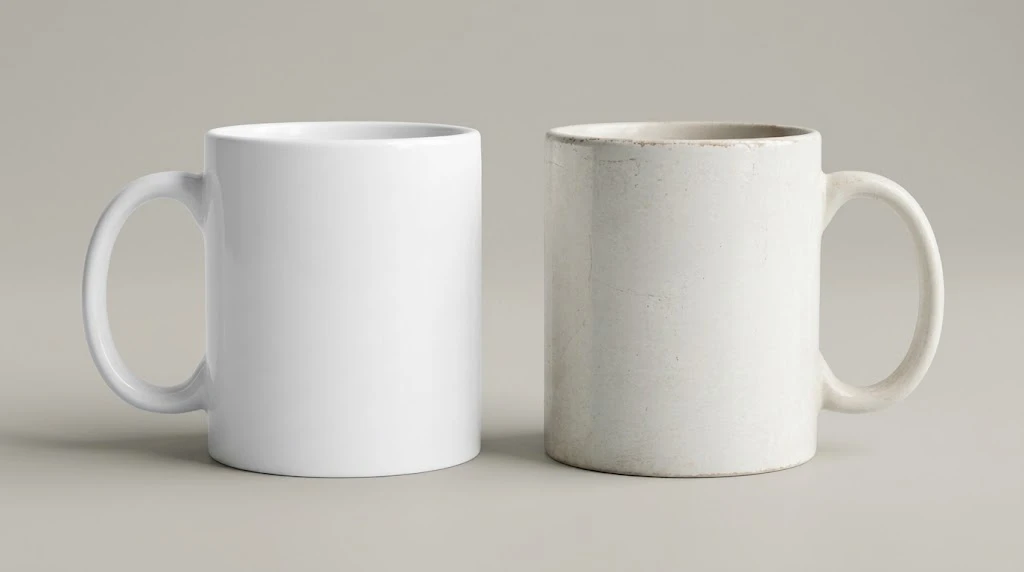
Table of Contents
- 1. High-Temperature Decal Firing: The Logo That Becomes the Surface
- 2. Screen Printing: Fast, Affordable, Surface-Level
- 3. Durability Showdown: Which Truly Prevents Fading?
- 4. Design Flexibility & Branding Impact
- 5. Cost: Investment vs. Lifecycle Value
- 6. Decision Guide: When to Choose Each Method
- 7. Partner With Mofe for Durable Branded Drinkware
1. High-Temperature Decal Firing: The Logo That Becomes the Surface
When sourcing custom glass cups or ceramic mugs for wholesale, durability is not optional — it is brand protection. A fading logo does not just hurt aesthetics; it signals cheap quality to your end customer and quietly damages the trust you spent years building[1].
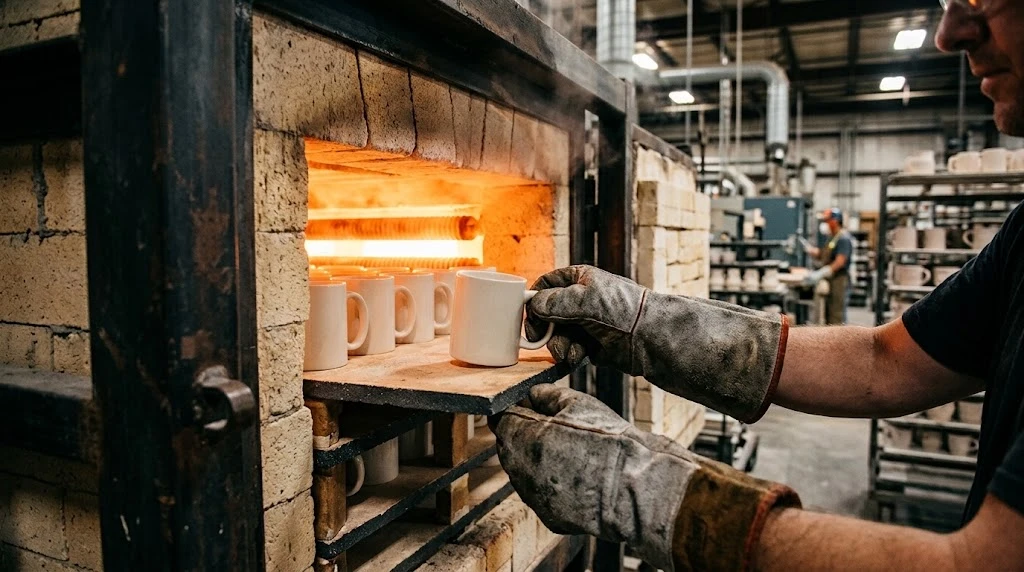
High-temperature decals — also called ceramic fired decals or on-glaze decals — work differently from any surface print. The artwork is first pre-printed onto special decal paper, then transferred onto the glazed ceramic or glass surface, and finally fired in a kiln at 600–800 °C (1112–1472 °F). During firing, inorganic pigments chemically fuse into the glaze layer itself[2].
The technical result: the logo becomes part of the glass or ceramic surface — not printed on top of it. That single difference drives everything downstream:
- Dishwasher safe — survives commercial-grade wash cycles
- Resistant to acids and detergents — the chemistry of everyday use cannot strip it
- Withstands high-temperature sterilization — safe for food-service and lab applications
- Scratch-resistant — a fork, a spoon, or a stack of cups will not wear it away
- Fade-proof for years under normal use
This is why fired decals are the standard for restaurant tableware, laboratory glassware, premium retail ceramic mugs and export-grade drinkware — products that must look right after hundreds of real-world cycles.
2. Screen Printing: Fast, Affordable, Surface-Level
Screen printing (silk screen printing) is a direct surface method: ink is pushed through a mesh stencil onto the glass or ceramic, then cured by heat or UV. The ink stays on the surface layer — it never chemically integrates with the glaze.
Screen printing has real strengths for the right job:
- Good for everyday promotional use
- Lower setup cost and faster turnaround
- Well suited to 1–2 solid colors
But the trade-offs are equally clear for durability-driven programs:
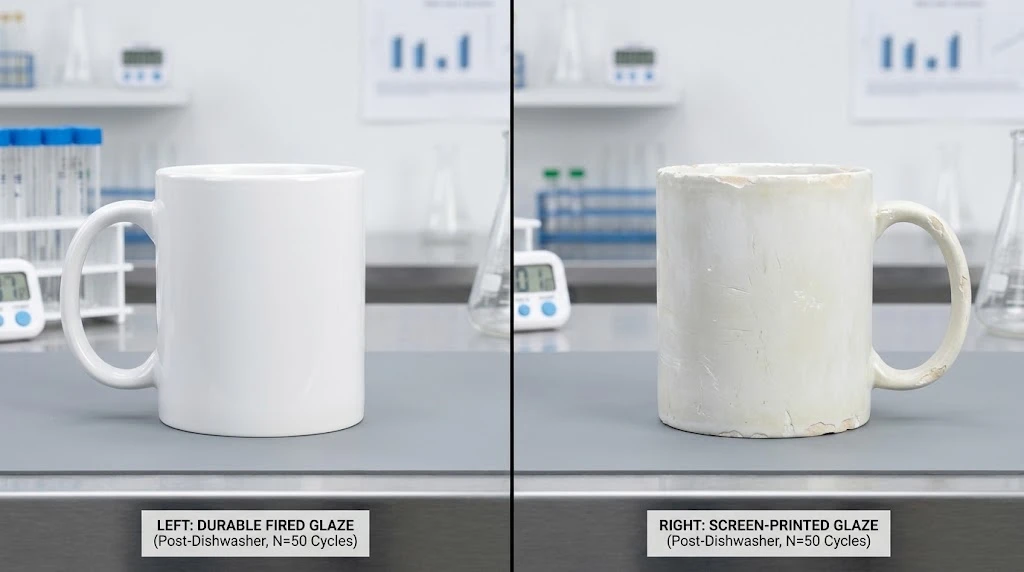
- Ink can chip under repeated dishwasher cycles
- Abrasive cleaning accelerates wear
- Lower chemical resistance than fired pigment
Screen printing dominates promotional giveaways, event merchandise and short-lifecycle marketing campaigns — places where cost per unit matters more than a five-year logo.
3. Durability Showdown: Which Truly Prevents Fading?
Put side by side, the difference is a matter of engineering, not opinion:
| Criteria | High-Temperature Decals | Screen Printing |
|---|---|---|
| Logo integration | Fused into the glaze | Surface-level ink |
| Dishwasher resistance | Excellent — commercial cycles included | Moderate — chips over repeated cycles |
| Scratch resistance | High | Medium |
| Chemical resistance | High — acids and detergents | Limited |
| Long-term fade resistance | 5–10+ years | 1–3 years depending on use |
If your product will be used daily in restaurants, offices or retail resale environments, fired decals are significantly more reliable. Screen printing is cost-effective — but it is not engineered for extreme longevity. If your logo is a core part of your brand promise, plan for the product’s real life, not just its launch day.
4. Design Flexibility & Branding Impact
Durability is only half the story — what your logo can look like matters just as much for premium positioning.
High-temperature decals support:
- Multi-color printing and true gradients
- Metallic finishes — gold, platinum, champagne
- Fine lines and highly detailed artwork
- Pantone color matching for brand consistency
Screen printing is best for:
- Simple, bold logos
- Strong typography
- Tight, limited color palettes
If your brand identity relies on visual precision and premium perception — a detailed crest, a gradient sunset, a metallic monogram — decals deliver a stronger visual impact that screen printing simply cannot reproduce.
5. Cost: Investment vs. Lifecycle Value
From a procurement perspective, the real question is not “which is cheaper per unit today” — it is “which is cheaper over the product’s whole life.”
Screen printing — lower entry cost
- Lower initial cost per unit
- Ideal for large-volume, simple designs
- Best for price-sensitive markets and short campaigns
High-temperature decals — higher investment, lower risk
- Higher production cost — kiln firing plus manual application
- Longer production cycle
- Higher perceived product value at retail
- Lower risk of customer complaints and returns over time
For premium private label brands, the lifecycle math usually favors fired decals: one complaint-free five-year product beats five cheap replacements with faded logos. See our full ceramic mug printing techniques comparison to see where decals sit against other decoration options.
6. Decision Guide: When to Choose Each Method
Choose high-temperature decals if:
- You are building a long-term retail brand
- Products will go through commercial dishwashing
- You need detailed, multi-color or metallic artwork
- You prioritize durability over the lowest first cost
Choose screen printing if:
- The project is event-based or promotional
- Your logo is single-color and simple
- Product lifecycle is short
- Budget is the primary constraint
If you are still comparing processes, two related reads will help: our laser engraving vs screen printing guide covers metal bottles, and the custom logo printing overview maps all the major options side by side.
Mofe specializes in small-batch wholesale customization for brands that care about long-term market reputation. Send us your artwork and target volumes, and our team will confirm printing feasibility, firing schedules and per-unit costs — with a straight recommendation on which method protects your brand best. Request a custom drinkware quote →
7. Partner With Mofe for Durable Branded Drinkware
At Mofe, we focus on small-batch wholesale customization for brands that care about long-term market reputation. For most ceramic and glass drinkware projects we recommend high-temperature decal firing because:
- It protects brand identity in real-world use — from commercial dishwashers to daily handling
- It reduces after-sales issues — fewer faded-logo complaints, fewer returns
- It elevates perceived product quality — the difference customers feel at first unboxing and after year two
Screen printing remains available for budget-sensitive, short-cycle projects — but for durability-driven brands, fired decals are the gold standard. If you are sourcing custom drinkware for the first time, start with our full-color drinkware printing guide to understand the full decoration landscape before you brief your factory.
Footnotes & References
[1] Industry practice on decoration durability for food-contact ceramic and glass drinkware. Mofecup engineering department.
[2] Standard ceramic decoration reference: fired (on-glaze) pigments fuse with the glaze layer at 600–800 °C, versus surface-cured inks that remain mechanically bonded only. Overglaze decoration — Wikipedia
[3] Fade-resistance ranges (5–10+ years for fired decals; 1–3 years for screen-printed surface ink) are based on typical commercial dishwasher and daily-handling conditions. Exact performance depends on glaze type, firing profile and usage — confirm with a factory trial before full production.