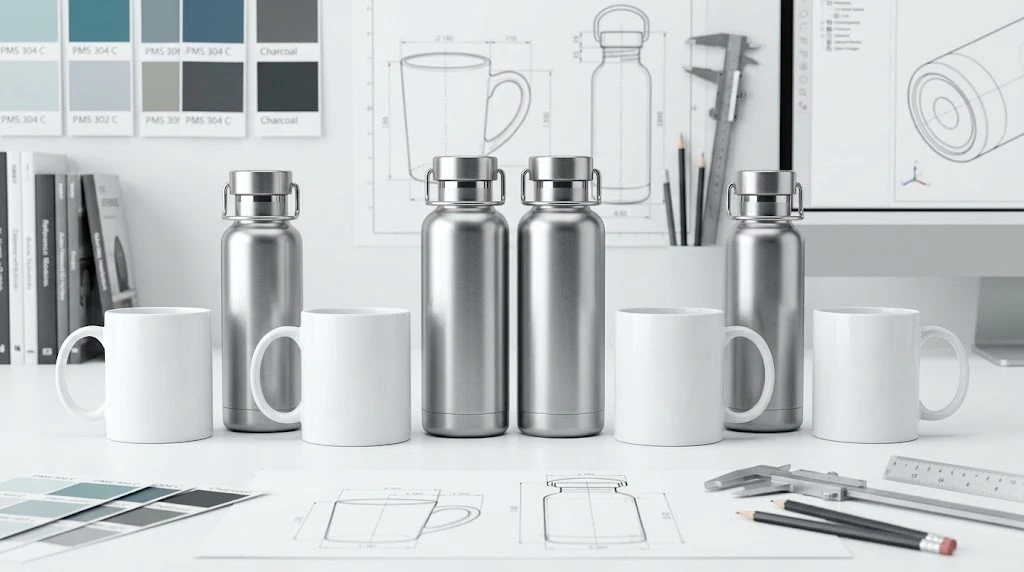
Why Application-Based Material Selection Matters for B2B Buyers
Most custom drinkware buyers start with a material — stainless steel, glass, ceramic, or plastic — and then try to fit that material to their end-users’ needs. But this backward approach often leads to poor product-market fit: a beautifully engraved stainless steel bottle that’s too heavy for gym-goers, or a sleek glass bottle that shatters on the first camping trip.
The smarter approach is to start with the application and let the use case dictate the material. A hydration bottle for CrossFit athletes has fundamentally different requirements than a thermos for a construction site or a gift mug for a corporate conference. Matching material properties to real-world usage patterns reduces returns, increases brand satisfaction, and maximizes the lifetime value of your custom drinkware investment.
Coffee and Tea Drinkware: Vacuum-Insulated Stainless Steel
For brands sourcing custom drinkware for coffee chains or workplace beverage programs, vacuum-insulated stainless steel is the clear front-runner. Double-wall vacuum insulation in 304 or 316 stainless steel maintains beverage temperature for 8–12 hours, critical for commuters and office professionals. Stainless steel does not absorb flavors or odors, is fully compatible with commercial dishwashing, and accepts laser engraving exceptionally well for permanent branding.
Key considerations: narrow mouth (48–55 mm) improves heat retention but consider a wider opening if cleaning is a priority. Leak-proof, one-handed drinking lids with removable silicone gaskets are essential for the coffee market.
Sports and Fitness Drinkware: Lightweight Tritan or Aluminum
For sports teams and fitness brands, weight is the top priority. A 500 ml double-wall stainless bottle weighs 300–350 g. A comparable Tritan bottle weighs just 120–150 g. Tritan offers clarity like glass with impact resistance like plastic, and wide-mouth openings (63–80 mm) allow fast filling and easy cleaning. Aluminum is another strong contender — lighter than stainless, excellent print surfaces, and lower cost — though it dents more easily and offers minimal insulation.
Outdoor and Camping Drinkware: Rugged Double-Wall Stainless
Outdoor brands need drinkware that withstands extreme conditions. Double-wall vacuum-insulated stainless steel maintains temperature in sub-freezing or scorching conditions, prevents exterior condensation, and resists scratches from rocks and gear. A wide, flat base ensures stability on uneven ground. Wall thickness of 0.5–0.7 mm is recommended for dent resistance.
Corporate Gifts: Ceramic and Glass
Ceramic mugs and glass bottles communicate premium quality. A ceramic mug with reactive glaze or a glass bottle with sandblasted logo signals thoughtful brand investment. Borosilicate glass with silicone sleeves offers sophisticated presentation for wellness programs and executive gift boxes.
Material × Use Case Comparison Matrix
| Application | Best Material | Key Advantage | Trade-Off |
|---|---|---|---|
| Coffee / Tea | Vacuum-insulated stainless | 8–12 hr heat retention | Heavier than plastic |
| Sports / Fitness | Tritan copolyester | Lightweight (120–150g) | No insulation |
| Outdoor / Camping | Double-wall stainless | Extreme durability | Heaviest option |
| Corporate Gifts | Ceramic or glass | Highest perceived value | Fragile in transit |
| Kids / School | BPA-free Tritan | Shatterproof + certified safe | Plastic scratches |
By aligning material selection with application, you reduce returns, increase usage frequency, and justify premium pricing. Contact our team for a personalized material consultation.